
#ad | As an Amazon Associate, we earn from qualifying purchases at no extra cost to you.
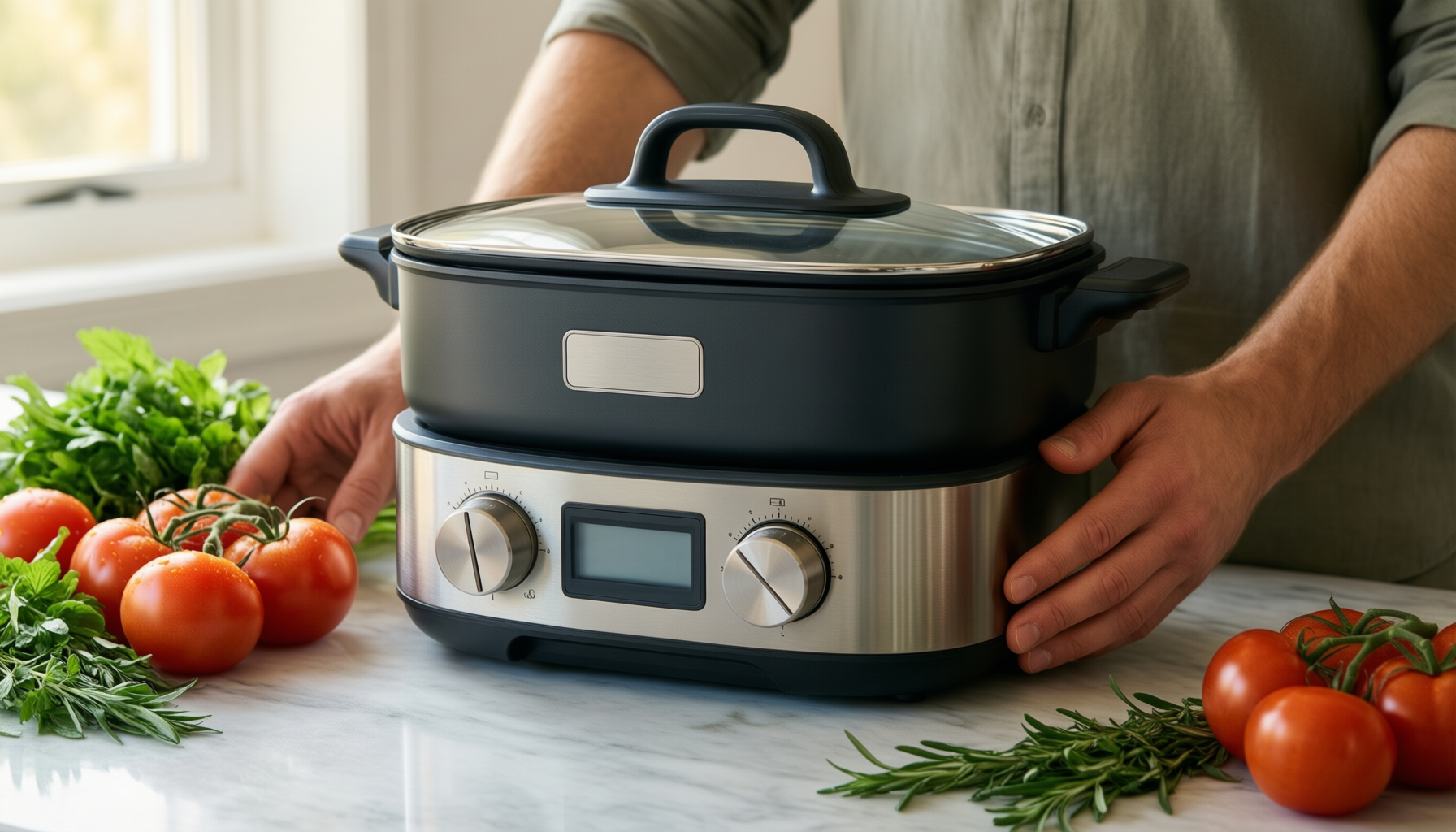
The Morphy Richards 501027 addresses a specific kitchen inefficiency: the mismatch between standard pot sizes and small household portions. Its 1-liter capacity is designed to yield exactly three starter portions or two large servings, eliminating the waste of cooking in a 2.5-liter pot for one or two people. The standout feature is the integrated sauté function, which allows you to seal in aromatics directly in the vessel before blending, a step most basic soup makers skip. However, the 1-liter limit is a hard constraint; if you regularly cook for four or more, this unit will feel restrictive. This compact saute and soup maker is best for singles, couples, or small households who want fresh, customized soup in under 25 minutes without the hassle of multiple pans.
Cooking a Single Serving Without Washing a Full Pot
The primary friction point for small households is the scale mismatch between standard cookware and actual consumption. Most stockpots start at 2.5 liters or larger, meaning that making a single bowl of soup requires cooking a volume that will either go to waste or require complex storage. The 1-liter capacity of this model aligns precisely with the “two large portions” metric, allowing you to prepare a meal for a couple without the psychological burden of over-cooking. This size also simplifies portion control, as you can visually gauge ingredient quantities against the jug’s volume markers rather than estimating by weight.
🛒 Check Price on Amazon →✓ See today's price & reviews
The dual-function utility of the sauté setting is critical for flavor development in small batches. In traditional soup making, you often sauté onions or garlic in a separate pan before transferring them to the pot, which increases the number of dishes to wash. Here, the vessel serves as both the sautéing pan and the cooking pot. You can chop your ingredients to the recommended 1 cm to 2 cm pieces, add them to the dry jug, and use the sauté function to caramelize the aromatics. This direct heat application maximizes flavor without the need for additional cookware, streamlining the workflow for busy mornings or quick weeknight dinners.
Sautéing Aromatics in the Vessel
The sauté function is not merely a pre-heat step but a distinct cooking mode that allows for browning and sealing. By heating the ingredients directly in the jug, you develop a deeper flavor base than you would with a simple “blend and cook” cycle. This is particularly useful for recipes like the included roast tomato and basil soup, where the sweetness of the tomatoes benefits from initial browning. The process requires attention, as the small volume heats up quickly, but it results in a more complex taste profile than passive cooking.
Managing Ingredient Sizes for Optimal Blending
The manual specifies chopping ingredients to 1 cm to 2 cm pieces for best results. This size recommendation is not arbitrary; it ensures that the blades can engage the material effectively during the blending phase. Larger chunks may not blend smoothly, leading to an uneven texture, while smaller pieces may cook too quickly and burn during the sauté stage. Adhering to this size guideline is essential for achieving the “smooth” or “chunky” consistency options. It also ensures that the heating element can distribute heat evenly across the ingredients, preventing hot spots that could scorch the base of the jug.
900W Power and Brushed Aluminium Build: What the Specs Actually Do
The 900-watt motor provides sufficient power to heat a 1-liter volume of liquid and solid ingredients efficiently. In compact appliances, wattage is often a balancing act between speed and energy consumption. At 900W, this unit is designed to reach cooking temperature quickly, which is crucial for the 19-minute smooth soup cycle. The power is adequate for boiling water and simmering vegetables without the long wait times associated with lower-powered models. This speed is a key factor in the “quick operation” promise, allowing you to have a hot meal ready in a fraction of the time required by traditional stovetop methods.
The exterior finish is brushed aluminium, which provides a durable and stylish look that fits into modern kitchen aesthetics. This material choice suggests a focus on both durability and visual appeal, as brushed aluminium is resistant to minor scratches and fingerprints compared to glossy plastic finishes. The black accents on the control panel and base provide a contrast that highlights the LED display. While the exterior is aluminium, the internal cooking surface features an easy-clean non-stick coating, which is a critical functional difference from the outer shell. This dual-material approach ensures that the unit looks premium on the counter while remaining practical for daily use.
Heat Distribution in a Small Volume
The combination of 900W power and a 1-liter capacity creates a high power-to-volume ratio. This means the heating element can transfer energy to the ingredients rapidly, which is beneficial for the sauté function. However, it also means that the soup can reach a boil quickly, so the “keep warm” function is useful for preventing overcooking if you are not ready to eat immediately. The heat distribution is designed to be even across the base, but users should be mindful of the non-stick coating’s limitations regarding direct contact with dry ingredients, as noted in the cleaning instructions.
The Role of the LED Display
The push-button control panel features an LED countdown display, which provides real-time feedback on the cooking progress. This is a significant usability improvement over models with simple indicator lights, as it allows you to plan your meal timing accurately. You can see exactly how many minutes are left, which is helpful when coordinating with other cooking tasks. The display also likely indicates the current function, such as smooth, chunky, or blend, ensuring that you are in the correct mode. This transparency reduces the anxiety of “blind” cooking and makes the appliance more accessible for first-time users.
Who Should Skip This Compact Saute Maker
This product is not suitable for households that regularly cook for four or more people. The 1-liter capacity is a hard limit, and attempting to cook a larger batch would require multiple cycles, which is inefficient and time-consuming. If your household size exceeds two, you will likely find that the volume is insufficient for a main meal, limiting the appliance to starter portions or single servings. For families, a larger multi-cooker or a traditional stockpot is a more practical choice, as the time saved by the 19-minute cycle is offset by the need to cook multiple batches.
Users who require pressure cooking or slow-cooking functions should also look elsewhere. This model is a dedicated soup maker with a sauté function, not a multi-cooker. It does not have the sealed lid mechanism required for pressure cooking, nor the low-heat, long-duration settings needed for slow-cooking tough cuts of meat. If your cooking style involves braising, stewing, or pressure-cooking, this appliance will not meet your needs. It is designed for quick, fresh soups and smoothies, not for complex, long-cooking recipes.
The Non-Stick Coating Limitation
While the internal jug has a non-stick coating, it is not a PTFE-free or ceramic-coated surface. The description notes that starches and sugars can stick to the base if placed in direct contact. This means that while the coating helps with general cleaning, it is not immune to all types of food residue. Users who frequently cook high-starch soups, such as those with potatoes or rice, may find that the base requires more scrubbing than expected. If you are looking for a completely maintenance-free cooking surface, this model may not meet that expectation.
Lack of Advanced Functions
The absence of a pressure cook function is a significant limitation for those who want a single appliance to replace multiple pots. You cannot use this unit to cook beans from scratch, pressure-cook chicken, or make yogurt. It is a specialized tool for soups and smoothies, and its utility is limited to that specific category. If you are looking for a versatile kitchen workhorse, a multi-cooker with pressure, slow-cook, and steam functions would be a better investment. This model is a niche solution for a specific problem, not a general-purpose cooking device.
How It Stacks Up Against Russell Hobbs and Tefal Compact Options
In the compact soup maker category, this model competes with brands like Russell Hobbs and Tefal, which offer similar 1-liter capacities and basic blend-and-cook functions. The key differentiator here is the integrated sauté function. Many competing models in this price range only offer a “cook” function that heats and blends, but do not allow for the initial browning of ingredients. This lack of sauté capability means that the flavor development is less complex, resulting in a soup that tastes more like a blended vegetable puree than a properly cooked dish. The Morphy Richards model offers a more authentic cooking experience by allowing you to control the initial heating phase.
The brushed aluminium finish also sets it apart from many competitors that use all-plastic exteriors. While plastic is lighter and often cheaper, the aluminium finish provides a more durable and premium feel. It is less prone to warping or discoloration over time and looks better in a kitchen setting. The LED display is another advantage over basic models that use simple LED lights to indicate power or cooking status. The countdown display provides more information, allowing for better meal planning and reducing the need to guess when the soup is ready.
Design and Aesthetic Considerations
The top-down design with a large jug is a practical feature that allows for easy filling and cleaning. Unlike some models that have a fixed base and a removable lid, this design allows you to pour ingredients directly into the jug without having to lift a heavy lid. The compact footprint means it fits easily on a kitchen counter, even in smaller kitchens. The black and brushed aluminium color scheme is neutral and versatile, matching a wide range of kitchen decors. This aesthetic appeal is a minor but important factor for users who care about the look of their small appliances.
Functionality Comparison
When compared to Tefal models, the Morphy Richards unit offers a similar range of functions but with a focus on ease of use. The push-button controls are simple and intuitive, making it accessible for users who are not tech-savvy. The “pre-clean” function is a useful addition that helps to loosen residue before you rinse the jug. This feature is not always present in competing models and can save time during the cleaning process. The overall functionality is comparable to other compact soup makers, but the attention to detail in the design and the inclusion of the sauté function give it an edge in terms of culinary versatility.
Cleaning the 1L Vessel: Dishwasher Safe or Hand Wash Only?
The cleaning process for this appliance is designed to be quick and easy, thanks to the non-stick coating on the internal jug. The manual recommends a quick rinse under the tap and a wipe with a soapy sponge. This is significantly faster than scrubbing a traditional pot, which often requires soaking and vigorous scrubbing to remove stuck-on food. The non-stick surface prevents food from adhering strongly, making the cleanup process minimal. However, it is important to note that the jug is not dishwasher safe, so hand washing is required. This is a common limitation for appliances with non-stick coatings, as the high heat and harsh detergents in dishwashers can degrade the coating over time.
The “pre-clean” function is a helpful feature that assists with the cleaning process. By running this function after cooking, the appliance helps to loosen any residue that may have stuck to the base or sides of the jug. This reduces the need for scrubbing and ensures that the jug is ready for the next use with minimal effort. The function is particularly useful for soups with high starch content, which are more likely to stick. Using the pre-clean function before rinsing can save time and effort, making the appliance more convenient for daily use.
Handling Starch and Sugar Residue
The product description warns that starches and sugars can stick to the inside base of the jug if placed in direct contact. This is a specific limitation that users need to be aware of. To avoid this issue, it is recommended to add half a cup of water or stock to the jug before adding solid ingredients. This creates a liquid barrier that prevents the ingredients from sticking to the base. Following this advice is crucial for maintaining the non-stick coating and ensuring easy cleaning. If you ignore this step, you may find that the base of the jug becomes difficult to clean, especially after cooking soups with potatoes, rice, or sweetcorn.
Storage and Maintenance
The compact form factor makes storage easy, as the jug can be stored on a shelf or in a cupboard without taking up much space. The base unit is also compact, allowing it to be stored away when not in use. Regular maintenance involves ensuring that the non-stick coating is not damaged by abrasive sponges or utensils. Using a soft sponge and mild detergent is recommended to preserve the coating. The LED display and control panel should be wiped with a damp cloth to keep them clean and functional. Proper care will ensure that the appliance remains in good condition for years of use.
Final Verdict: Who Is This For?
The Morphy Richards 501027 is a specialized tool that excels in one specific area: making small-batch, flavor-developed soups for one or two people. It is the right choice if you are a single person or a couple who values the convenience of a single-vessel workflow and wants the ability to sauté aromatics for better flavor without washing a separate pan. The 19-minute cycle and 1-liter capacity are perfectly aligned for quick, fresh meals that do not require batch cooking.
However, you should choose an alternative if your household size is three or more, as the 1-liter capacity will force you to run multiple inefficient cycles. It is also not the right fit if you are looking for a multi-cooker that can handle pressure cooking, slow-cooking, or large-volume batch cooking. For those needs, a larger multi-cooker or traditional stockpot remains the more practical option. This appliance is a niche solution for a specific problem, not a general-purpose cooking device.
🛒 Check Price on Amazon →✓ See today's price & reviews