
#ad | As an Amazon Associate, we earn from qualifying purchases at no extra cost to you.
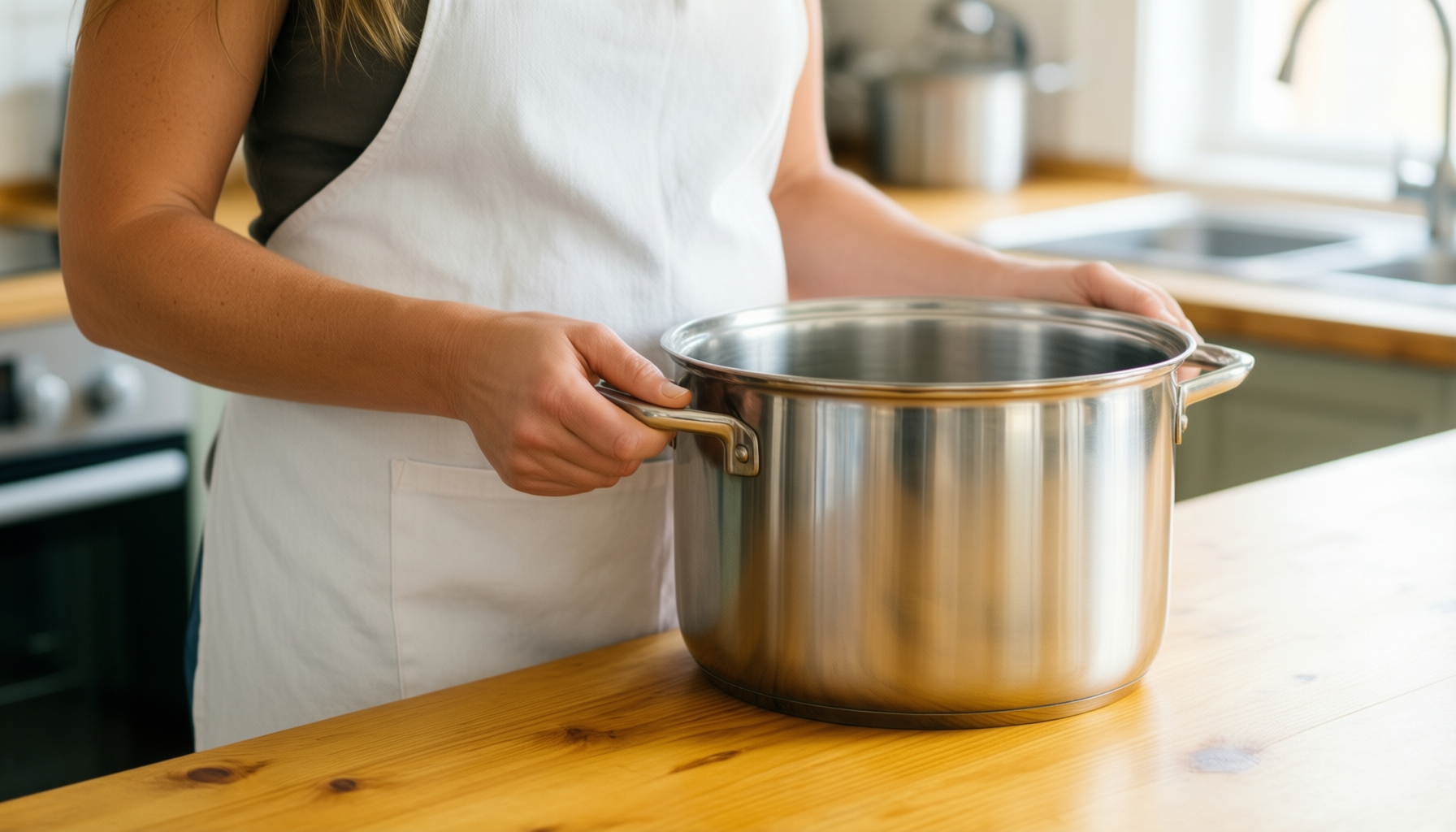
The KitchenAid Hard Anodized Induction Nonstick Stock Pot addresses a specific friction point for home cooks who need a large vessel that performs reliably on induction hobs without the weight penalty of cast iron. Its standout feature is the thick, forged base designed to eliminate hot spots, ensuring that rich stocks and large batches of vegetables cook with consistent heat distribution. However, the nonstick interior imposes a clear limitation: it is not suitable for high-heat searing or prolonged exposure to highly acidic ingredients, which can degrade the coating over time. This model is best for cooks who prioritize easy cleanup and even simmering for family-sized meals over high-heat techniques.
The 8-Quart Capacity and UK Induction Compatibility
The 8-quart capacity of this stock pot is a deliberate design choice that aligns with the needs of households preparing meals for four to six people. In a UK kitchen, where induction hobs are increasingly common, the size of the cooking vessel must match the diameter of the hob zone to ensure efficient energy transfer. A pot that is too small for the zone wastes energy, while one that is too large may not heat evenly. This model’s dimensions are calibrated to sit comfortably on standard induction burners, allowing the magnetic field to interact fully with the base. This compatibility is crucial because induction cooking relies on the pot’s magnetic properties to generate heat directly within the cookware, rather than through a hot surface.
🛒 Check Price on Amazon →✓ See today's price & reviews
The thick, forged base is the key mechanism that makes this induction-compatible design effective. Unlike thinner aluminum pots that may cause the induction hob to cycle rapidly on and off—a phenomenon known as “hunting”—the mass of the forged base absorbs and retains heat steadily. This thermal mass ensures that the temperature remains stable, which is essential for slow-cooking tasks like making stock or reducing sauces. The product description explicitly states that the base is designed to heat evenly, eliminating hot spots. For a cook using an induction hob, this means less energy wasted on correcting temperature fluctuations and more consistent results in the final dish. The matte black finish also helps in visualizing the heat distribution, as any unevenness would be more apparent during the cooking process.
While the pot is oven-safe to 500°F without the lid and 350°F with the lid, this feature is less relevant for induction users who typically finish dishes on the hob. However, it provides flexibility for those who might want to finish a dish in the oven after simmering. The glass lid is dishwasher safe, which is a practical benefit for a pot of this size. The ease of cleaning is a significant advantage, as large pots can be cumbersome to wash by hand. The dishwasher-safe rating means that the pot can be cleaned quickly after use, reducing the time spent on kitchen chores. This is particularly useful for busy households where convenience is a priority.
Base Thickness and Heat Retention
The thickness of the base is a critical specification that impacts the pot’s performance on induction hobs. A thicker base provides greater thermal inertia, which helps to maintain a steady temperature. This is particularly important for recipes that require a gentle simmer, such as soups and stews. The forged construction ensures that the base is uniform in thickness, which prevents weak points that could lead to warping or uneven heating. This uniformity is a testament to the manufacturing quality of the product.
Induction Efficiency and Energy Use
Induction hobs are highly efficient, but their efficiency depends on the cookware used. A pot with a flat, thick base ensures that the magnetic field is fully utilized, reducing energy waste. This model’s design is optimized for this purpose, making it a good choice for those looking to reduce their energy consumption. The even heat distribution also means that less energy is required to maintain the desired cooking temperature, which can lead to lower utility bills over time.
Nonstick Performance and Acid Tolerance
The triple-layer nonstick interior of this stock pot is designed for effortless food release. This is a significant advantage for cooks who want to minimize cleanup time. The nonstick coating extends to the handle rivets, ensuring that no food particles are trapped in hard-to-reach areas. This attention to detail makes the pot easier to clean and maintain. However, nonstick coatings are not indestructible. They are susceptible to damage from metal utensils and high heat. The product description does not specify the exact material of the nonstick coating, but it is likely a PFOA-free or similar safe material, as is standard for modern cookware.
One of the main limitations of nonstick cookware is its reaction to acidic ingredients. Prolonged exposure to high-acid foods, such as tomatoes, wine, or citrus, can degrade the nonstick coating over time. This is a common issue with all nonstick pots, not just this one. For cooks who frequently prepare acidic sauces or stews, this may be a concern. The coating may lose its nonstick properties more quickly if exposed to these ingredients regularly. To extend the life of the pot, it is advisable to avoid cooking highly acidic foods in it for extended periods. Instead, use a stainless steel pot for such tasks and reserve this pot for non-acidic ingredients.
The matte black finish of the exterior is also a consideration. While it looks sleek and modern, it is susceptible to scratching if metal utensils are used. The product description does not specify the material of the exterior, but it is likely a durable coating that can withstand normal use. However, to maintain its appearance, it is best to use wooden, silicone, or nylon utensils. This is a common recommendation for all nonstick cookware. The dishwasher-safe rating is a plus, but it is important to note that the high heat and harsh detergents in dishwashers can also degrade nonstick coatings over time. Hand washing is generally recommended to extend the life of the coating, but the dishwasher-safe feature provides flexibility for those who prefer it.
Handling Acidic Ingredients
When cooking acidic ingredients, it is important to be mindful of the nonstick coating. Short-term exposure is usually not a problem, but prolonged simmering of acidic foods can cause the coating to break down. This can lead to the pot losing its nonstick properties and potentially leaching materials into the food. To avoid this, it is best to use a different pot for acidic recipes. This is a common trade-off with nonstick cookware, and it is something that buyers should be aware of before purchasing.
Utensil Selection and Care
The choice of utensils is crucial for maintaining the nonstick coating. Metal utensils can scratch the surface, leading to premature wear. Wooden, silicone, or nylon utensils are safer options. They are less likely to damage the coating and are gentle on the surface. This is a simple but important practice that can extend the life of the pot. Additionally, avoiding high heat is essential. Nonstick coatings are not designed for high-temperature cooking, and using them at high heat can cause them to degrade. This pot is best suited for simmering, boiling, and gentle cooking methods.
Heat Distribution and Simmering Consistency
The even heat distribution provided by the thick, forged base is a key advantage of this stock pot. Hot spots are a common issue with thinner cookware, leading to uneven cooking and scorching. This model’s design eliminates this problem, ensuring that the food cooks evenly throughout. This is particularly important for recipes that require a steady simmer, such as stocks, soups, and stews. The consistent heat ensures that the flavors develop evenly and that the food does not burn on the bottom of the pot. This is a significant improvement over thinner aluminum pots, which are prone to hot spots.
The hard anodized aluminum construction provides durability and strength. Hard anodizing is a process that creates a harder, more durable surface on the aluminum. This makes the pot more resistant to wear and tear, ensuring that it lasts longer. The anodized layer also helps to prevent the aluminum from reacting with acidic foods, which can be a problem with regular aluminum cookware. This makes the pot more versatile and suitable for a wider range of recipes. The durability of the construction is a testament to the quality of the product, and it is a feature that buyers can rely on for long-term use.
Compared to stainless steel pots, this hard anodized aluminum pot offers better heat distribution for simmering. Stainless steel pots can be prone to hot spots, especially if they are not tri-ply or have a thick base. This model’s forged base ensures that the heat is distributed evenly, which is ideal for simmering. However, stainless steel pots are more durable and can withstand higher temperatures. They are also more resistant to scratching and can be used with metal utensils. The trade-off is that stainless steel pots are not nonstick, which can make cleanup more difficult. For cooks who prioritize easy cleanup and even heat distribution, this hard anodized aluminum pot is a better choice.
Simmering Performance
The ability to maintain a steady simmer is crucial for many recipes. This pot’s design ensures that the temperature remains consistent, which is essential for developing flavors. The thick base helps to retain heat, so the pot does not cool down quickly when the heat is reduced. This is a significant advantage over thinner pots, which can cool down rapidly. The consistent heat ensures that the food cooks evenly and that the flavors develop properly. This is a feature that is particularly important for slow-cooked dishes, such as stews and braises.
Comparison with Stainless Steel
While stainless steel pots are more durable, they are not as effective for simmering as this hard anodized aluminum pot. The even heat distribution of this pot ensures that the food cooks evenly, which is a significant advantage. Stainless steel pots can be prone to hot spots, which can lead to scorching. This model’s design eliminates this problem, making it a better choice for simmering. The nonstick coating also makes cleanup easier, which is a significant advantage for busy households.
Who Should Skip This Pot
This stock pot is not suitable for cooks who frequently use metal utensils. The nonstick coating is susceptible to scratching, and using metal utensils can damage the surface. This is a common issue with all nonstick cookware, but it is a significant limitation for those who prefer to use metal spoons or forks. If you are a cook who relies on metal utensils, this pot may not be the right choice for you. You may want to consider a stainless steel pot instead, which is more resistant to scratching.
This pot is also not suitable for high-heat searing or broiling. The nonstick coating is not designed for high temperatures, and using it at high heat can cause it to degrade. This limits the pot’s use to simmering, boiling, and gentle cooking methods. If you are a cook who enjoys searing meats or broiling vegetables, this pot may not be the right choice for you. You may want to consider a cast iron skillet or a stainless steel pot instead, which can withstand higher temperatures.
Finally, this pot is not suitable for cooks who frequently prepare highly acidic foods. Prolonged exposure to acidic ingredients can degrade the nonstick coating, leading to premature wear. If you are a cook who frequently prepares tomato-based sauces or wine-based reductions, this pot may not be the right choice for you. You may want to consider a stainless steel pot instead, which is more resistant to acidic ingredients.
Metal Utensil Users
If you are a cook who prefers to use metal utensils, this pot is not a good fit. The nonstick coating is susceptible to scratching, and using metal utensils can damage the surface. This is a significant limitation for those who are used to using metal spoons or forks. You may want to consider a stainless steel pot instead, which is more resistant to scratching and can be used with metal utensils.
High-Heat Cooking Enthusiasts
If you are a cook who enjoys high-heat cooking techniques, such as searing or broiling, this pot is not a good fit. The nonstick coating is not designed for high temperatures, and using it at high heat can cause it to degrade. This limits the pot’s use to simmering, boiling, and gentle cooking methods. You may want to consider a cast iron skillet or a stainless steel pot instead, which can withstand higher temperatures and is suitable for high-heat cooking.
Longevity and Maintenance of the Matte Black Finish
The matte black finish of this stock pot is a sleek and modern design feature. However, it is susceptible to scratching if metal utensils are used. To maintain the appearance of the pot, it is best to use wooden, silicone, or nylon utensils. This is a simple but important practice that can extend the life of the pot. The dishwasher-safe rating is a plus, but it is important to note that the high heat and harsh detergents in dishwashers can also degrade the nonstick coating over time. Hand washing is generally recommended to extend the life of the coating, but the dishwasher-safe feature provides flexibility for those who prefer it.
The hard anodized aluminum construction provides durability and strength. The anodized layer helps to prevent the aluminum from reacting with acidic foods, which can be a problem with regular aluminum cookware. This makes the pot more versatile and suitable for a wider range of recipes. The durability of the construction is a testament to the quality of the product, and it is a feature that buyers can rely on for long-term use. The pot is designed to last, and with proper care, it can provide many years of service.
The even heat distribution and nonstick performance make this pot a versatile tool for the kitchen. It is suitable for a wide range of recipes, from soups and stews to sauces and stocks. The thick, forged base ensures that the heat is distributed evenly, which is essential for consistent results. The nonstick coating makes cleanup easy, which is a significant advantage for busy households. The pot is a good choice for cooks who want a versatile and easy-to-use tool for their kitchen.
Cleaning and Maintenance
To maintain the nonstick coating, it is best to hand wash the pot with mild soap and water. Avoid using abrasive sponges or scrubbers, as they can scratch the surface. The dishwasher-safe rating provides flexibility, but hand washing is generally recommended to extend the life of the coating. The glass lid is also dishwasher safe, which makes it easy to clean. The pot is designed to be easy to maintain, and with proper care, it can last for many years.
Long-Term Durability
The hard anodized aluminum construction ensures that the pot is durable and resistant to wear and tear. The anodized layer helps to protect the aluminum from corrosion and damage. This makes the pot a good investment for long-term use. The even heat distribution and nonstick performance ensure that the pot remains effective over time. With proper care, this pot can provide many years of service, making it a worthwhile addition to any kitchen.
Final Verdict
The KitchenAid Hard Anodized Induction Nonstick Stock Pot is a well-designed tool for cooks who prioritize even heat distribution and easy cleanup. Its 8-quart capacity and thick, forged base make it ideal for simmering and boiling on induction hobs. The nonstick coating is effective for food release, but it requires care to avoid damage from metal utensils and acidic ingredients. This pot is best for households that cook family-sized meals and value convenience in the kitchen. It is not suitable for high-heat cooking or for those who prefer to use metal utensils. For the right user, this pot offers a reliable and efficient solution for everyday cooking.
🛒 Check Price on Amazon →✓ See today's price & reviews