Midea Pressure Cooker 7.6L: A Practical Review for Large…

#ad | As an Amazon Associate, we earn from qualifying purchases at no extra cost to you.
This 7.6L vessel addresses the specific challenge of preparing large-batch meals for households of four to six without requiring multiple smaller pots. The standout feature is its 9-in-1 functionality, which consolidates pressure cooking, steaming, and yogurt making into a single unit, reducing counter clutter. However, the large capacity imposes a limitation: it is inefficient for single-person portions due to minimum liquid requirements. This model is best for UK families who cook in batches and need a versatile appliance that handles everything from stews to rice.
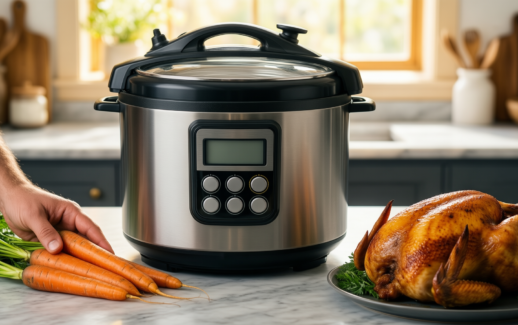
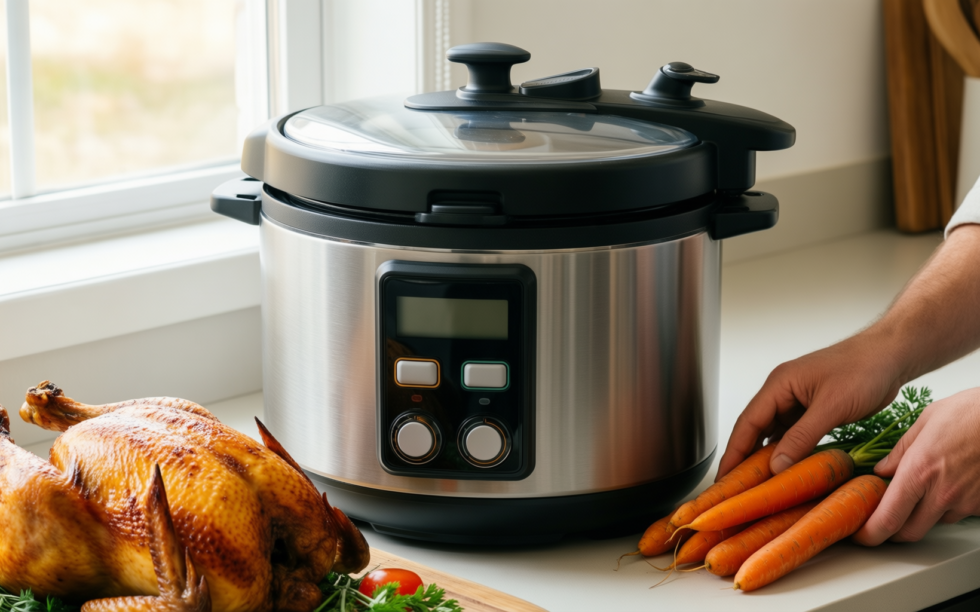
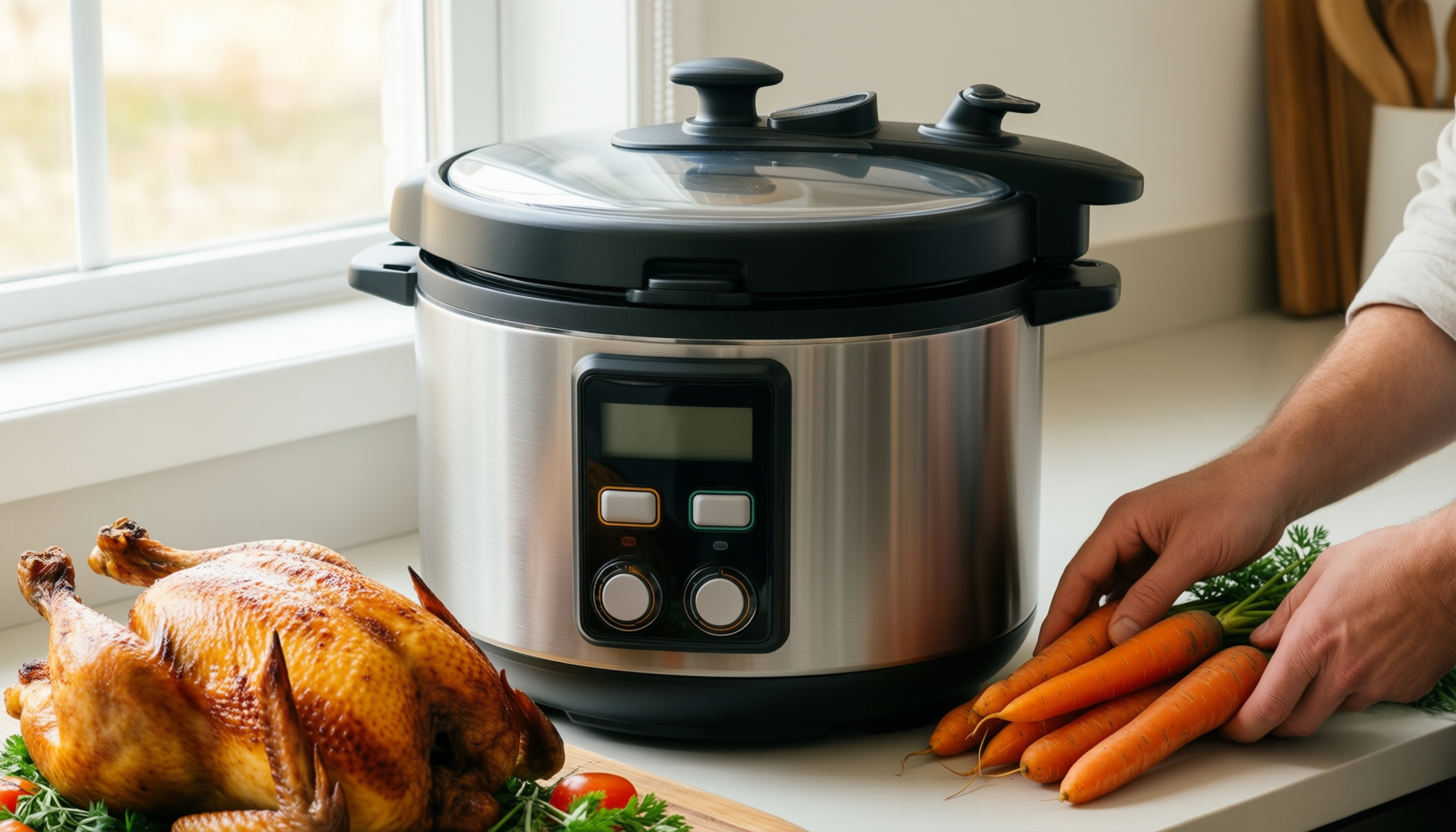
The practical difference between this large capacity and smaller alternatives becomes apparent when preparing complex dishes. A whole chicken fits comfortably with room for vegetables, whereas smaller units may require cutting the bird into pieces to ensure proper pressure circulation. This capability supports the “batch cooking” trend common in UK households, allowing users to prepare large quantities of rice or oatmeal for the week. The 16 programmable presets mentioned in the specifications are tailored to these larger volumes, ensuring that heat distribution remains consistent across the entire 7.6L volume.
🛒 Check Price on Amazon →✓ See today's price & reviews
Space considerations are a critical factor for UK kitchens, which often feature standard worktop dimensions. While the 7.6L capacity offers culinary advantages, the physical footprint of the unit must be measured against available counter space. The included accessories, such as the steam rack and measuring cup, add to the storage requirements, so buyers should verify that they have adequate cabinet space for the unit and its components. This model is not designed for compact kitchens where every centimeter is accounted for, but rather for spaces where a large appliance can be permanently stationed.
Feeding a Family of Six Without the Crowded Kitchen
The 7.6L capacity is the defining characteristic of this model, designed specifically to accommodate whole chickens or large batches of chili for family-sized dinners. Unlike standard 5.5L models that often struggle with large cuts of meat, this volume allows for generous portions without overcrowding the inner pot. For households where meal prep is a weekly ritual, this size means you can cook a full week’s worth of soups or stews in a single cycle, reducing the frequency of appliance use.
The practical difference between this large capacity and smaller alternatives becomes apparent when preparing complex dishes. A whole chicken fits comfortably with room for vegetables, whereas smaller units may require cutting the bird into pieces to ensure proper pressure circulation. This capability supports the “batch cooking” trend common in UK households, allowing users to prepare large quantities of rice or oatmeal for the week. The 16 programmable presets mentioned in the specifications are tailored to these larger volumes, ensuring that heat distribution remains consistent across the entire 7.6L volume.
Space considerations are a critical factor for UK kitchens, which often feature standard worktop dimensions. While the 7.6L capacity offers culinary advantages, the physical footprint of the unit must be measured against available counter space. The included accessories, such as the steam rack and measuring cup, add to the storage requirements, so buyers should verify that they have adequate cabinet space for the unit and its components. This model is not designed for compact kitchens where every centimeter is accounted for, but rather for spaces where a large appliance can be permanently stationed.
Capacity Translation for Real Meals
The 7.6L volume translates directly into the ability to cook a whole chicken with vegetables or a large pot of bean stew for six people. This capacity is larger than the 5.5L models that dominate the mid-range market, offering an advantage for family-sized cooking. The specification of 16 presets allows for precise control over cooking times and pressures, which is essential when scaling up recipes from individual to family portions.
Footprint and Kitchen Integration
The physical size of this unit is substantial, reflecting its large internal capacity. Buyers should measure their worktop space carefully before purchasing, as the unit requires a dedicated area for safe operation. The included power cord and condensation cup add to the overall storage needs, meaning that a standard UK kitchen may need to be reorganized to accommodate this appliance permanently.
Hard Water Areas: Managing Limescale in the Midea 7.6L
Living in a hard water area presents specific challenges for any electric pressure cooker, and this model is no exception. The non-stick coating on the inner pot is designed to resist food sticking, but mineral buildup from hard water can affect the longevity of the coating over time. Regular descaling is essential to maintain the performance of the heating element and the integrity of the pressure seals.
The maintenance routine for this model involves periodic cleaning of the inner pot and lid seals to prevent limescale accumulation. The condensation cup, included in the accessories, plays a role in managing moisture, but it must be emptied and cleaned regularly to prevent bacterial growth. Buyers in regions with high water hardness should consider using a water softener or adding vinegar to the water during cleaning cycles to mitigate mineral buildup.
The 10 safety features, including overheat protection and auto pressure release, are designed to handle the stresses of high-pressure cooking. However, these systems rely on clean seals and unobstructed vents to function correctly. Limescale buildup can interfere with the lid-safety lock system, potentially leading to safety issues if not addressed. Regular inspection of the seals and vents is a critical part of maintaining this appliance in hard water areas.
Non-Stick Coating and Mineral Buildup
The non-stick coating is a key feature for easy cleaning, but it is vulnerable to damage from abrasive cleaning tools and mineral deposits. Using soft sponges and avoiding metal utensils is essential to preserve the coating. Over time, limescale can create a rough surface that traps food particles, making cleaning more difficult.
Cleaning Protocols for Pressure Integrity
The lid-safety lock system and auto pressure release mechanism require clean, unobstructed components to function safely. The condensation cup and steam rack should be washed after each use to prevent residue buildup. The power cord and other electrical components should be kept dry to prevent damage. Regular maintenance ensures that the 10 safety features remain effective and that the appliance continues to operate reliably.
When the 7.6L Capacity Is Overkill for Your Household
For single-person or couple households, the 7.6L capacity of this model is often excessive and inefficient. The minimum liquid requirements for pressure cooking mean that small portions may not cook evenly, leading to inconsistent results. The energy inefficiency of heating a large 7.6L vessel for small meals is a drawback for those who cook for one or two people regularly.
The 16 presets are designed for larger volumes, which means that cooking small portions may require manual adjustments to achieve the desired texture and flavor. The delay timer, while useful for planning meals, does not compensate for the inefficiency of using a large appliance for small tasks. Buyers in smaller households should consider alternative models with capacities between 3L and 5L, which are better suited for individual or couple-sized meals.
The physical footprint of this unit is also a consideration for smaller households. The space required for the appliance and its accessories may be disproportionate to the cooking needs of a single person or couple. The included spoon, ladle, and measuring cup are useful, but they add to the storage requirements in a compact kitchen. For those who do not cook in large batches, this model is not the optimal choice.
Minimum Liquid Requirements
The minimum liquid requirement for pressure cooking is a critical factor for small households. Cooking small portions in a 7.6L vessel may result in uneven heating and poor texture. The 16 presets are calibrated for larger volumes, which means that small portions may require manual adjustment of time and pressure. This limitation makes the model less suitable for those who cook for one or two people regularly.
Energy Inefficiency for Small Portions
Heating a large 7.6L vessel for small meals is energy inefficient and can lead to higher electricity costs. The delay timer and other features do not offset the energy wasted in heating the large volume. For households that cook small portions regularly, a smaller model would be more energy-efficient and cost-effective in the long run.
Energy Costs: Electric Pressure Cooking vs. Gas Oven in the UK
The energy consumption of this electric pressure cooker is a key consideration for UK households, where energy costs are a significant concern. While the exact wattage is not specified in the product description, electric pressure cookers generally consume less energy than traditional gas ovens for similar cooking tasks. The 24-hour delay timer allows users to schedule cooking during off-peak hours, potentially reducing energy costs.
The 16 presets are designed to optimize cooking times, which can translate to reduced energy usage compared to slow cookers. The ability to cook large batches in a single cycle means that the energy cost per meal is lower when cooking for a family. The 9-in-1 functionality also reduces the need for multiple appliances, which can further lower overall energy consumption in the kitchen.
The comparison with gas ovens is complex, as gas is often cheaper per unit of energy than electricity in the UK. However, the speed and efficiency of pressure cooking can offset the higher cost of electricity. The 10 safety features ensure that the appliance operates safely and efficiently, reducing the risk of energy waste due to malfunctions. Buyers should consider their specific energy rates and cooking habits when evaluating the cost-effectiveness of this model.
Estimated Energy Consumption Per Cycle
The energy consumption per cycle depends on the cooking time and the specific preset used. The 24-hour delay timer allows for scheduling, which can help manage energy usage. The 16 presets are designed to minimize cooking time, which reduces energy consumption. The 9-in-1 functionality means that one appliance can perform multiple tasks, reducing the need for additional energy-consuming devices.
Cost-Per-Meal Analysis for Family Dinners
The cost-per-meal analysis for large family dinners is favorable when using this model. The ability to cook large batches in a single cycle reduces the energy cost per serving. The 16 presets allow for precise control over cooking, which can optimize energy usage. The 9-in-1 functionality means that the appliance can be used for a variety of meals, increasing its utility and reducing the need for other appliances.
Navigating the 14 Presets: Beyond Basic Pressure Cooking
The product description mentions 16 programmable preset functions, which cover a wide range of cooking tasks from meat and broth to oatmeal and yogurt. These presets are designed to simplify the cooking process by providing pre-set times and pressures for common dishes. The 9-in-1 functionality includes pressure cooking, rice cooking, steaming, yogurt making, slow cooking, sautéing, sous vide, food warming, and cake making.
The limitations of the preset logic become apparent when cooking complex recipes that require manual adjustment. While the presets are useful for standard dishes, they may not accommodate the specific needs of more intricate recipes. The 10 safety features ensure that the appliance operates safely, but they do not provide the flexibility needed for advanced cooking techniques. Buyers who enjoy experimenting with recipes may find the presets restrictive.
The comparison of preset accuracy against manual pressure settings is important for understanding the capabilities of this model. The 16 presets are calibrated for standard cooking, but manual adjustment may be necessary for achieving specific textures or flavors. The 24-hour delay timer allows for planning, but it does not provide the control needed for precise cooking. Buyers should be aware that the presets are a starting point, not a guarantee of perfect results.
Analysis of 9-in-1 Functions for UK Cuisine
The 9-in-1 functions are well-suited for UK cuisine, which often includes stews, soups, and rice dishes. The pressure cooking function is ideal for stews and soups, while the rice cooking function is perfect for everyday meals. The steaming function is useful for vegetables and fish, and the yogurt making function is a bonus for those who enjoy homemade dairy products.
Limitations of Preset Logic for Complex Recipes
The preset logic is designed for standard cooking, which means that complex recipes may require manual adjustment. The 16 presets do not provide the flexibility needed for advanced cooking techniques, such as sous vide or precise temperature control. Buyers who enjoy experimenting with recipes may find the presets limiting and may need to rely on manual settings for more complex dishes.
Who Should Skip This
This model is not suitable for single-person households due to the 7.6L capacity and minimum liquid requirements. The energy inefficiency of cooking small portions in a large vessel makes it a poor choice for those who cook for one. The physical footprint of the appliance is also too large for compact kitchens, making it impractical for small living spaces.
Couples who do not cook in large batches should also consider skipping this model. The 16 presets are designed for larger volumes, which means that small portions may not cook evenly. The 9-in-1 functionality is a benefit, but it is not enough to offset the inefficiency of using a large appliance for small meals. Buyers in smaller households should look for models with capacities between 3L and 5L.
Those who require precise temperature control for advanced cooking techniques may also find this model limiting. The 10 safety features ensure safe operation, but they do not provide the flexibility needed for sous vide or other precise cooking methods. The 24-hour delay timer is useful, but it does not compensate for the lack of manual control. Buyers who prioritize precision over convenience should consider alternative models.
Single-Person Households
The 7.6L capacity is excessive for single-person households, leading to energy inefficiency and uneven cooking. The minimum liquid requirements make it difficult to cook small portions effectively. The physical footprint is also too large for compact kitchens, making it impractical for small living spaces.
Compact Kitchen Spaces
The physical size of this unit requires a dedicated area on the worktop, which may not be available in compact kitchens. The included accessories add to the storage requirements, making it difficult to fit into small spaces. Buyers with limited counter space should consider smaller models that are easier to store and use.
Advanced Cooking Enthusiasts
The preset logic is designed for standard cooking, which may not meet the needs of advanced cooking enthusiasts. The 10 safety features ensure safe operation, but they do not provide the flexibility needed for precise temperature control. Buyers who require manual control for sous vide or other advanced techniques should look for models with more precise settings.
Final Verdict: Who Is This Midea 7.6L For?
Based on the specifications and functional limitations outlined above, this appliance serves a very specific demographic. It is the ideal choice for UK households of four to six people who prioritize batch cooking and convenience. If you regularly prepare whole chickens, large stews, or weekly portions of rice and oatmeal, the 7.6L capacity eliminates the need for multiple cooking cycles. The 9-in-1 functionality is particularly valuable for families who want to consolidate their kitchen tools, reducing the need for separate slow cookers, yogurt makers, or rice cookers.
However, this model is not recommended for the following groups:
- Single-person or couple households: The minimum liquid requirements and energy inefficiency of heating a 7.6L vessel for small portions make this a poor fit. A 3L–5L model will be more cost-effective and produce better results for smaller meals.
- Users with compact kitchens: The physical footprint and storage needs for accessories (steam rack, measuring cup, condensation cup) require a dedicated, permanent space on the worktop. If you lack counter space or cabinet room for a large appliance, this model will be impractical.
- Advanced cooks requiring precise temperature control: While the 16 presets cover standard cooking, the system lacks the manual flexibility needed for precise sous vide techniques or complex recipes that require exact temperature adjustments. If you prioritize precision over convenience, a model with more granular manual controls may be a better alternative.
In summary, if your primary goal is efficient, large-batch meal preparation for a family and you have the kitchen space to accommodate a substantial appliance, this Midea 7.6L is a capable and versatile tool. If you cook for one or two, or require precise manual control, look for a smaller, more specialized alternative.
🛒 Check Price on Amazon →✓ See today's price & reviews