Cordless Immersion Blender Review: Portability, Precision,…

#ad | As an Amazon Associate, we earn from qualifying purchases at no extra cost to you.
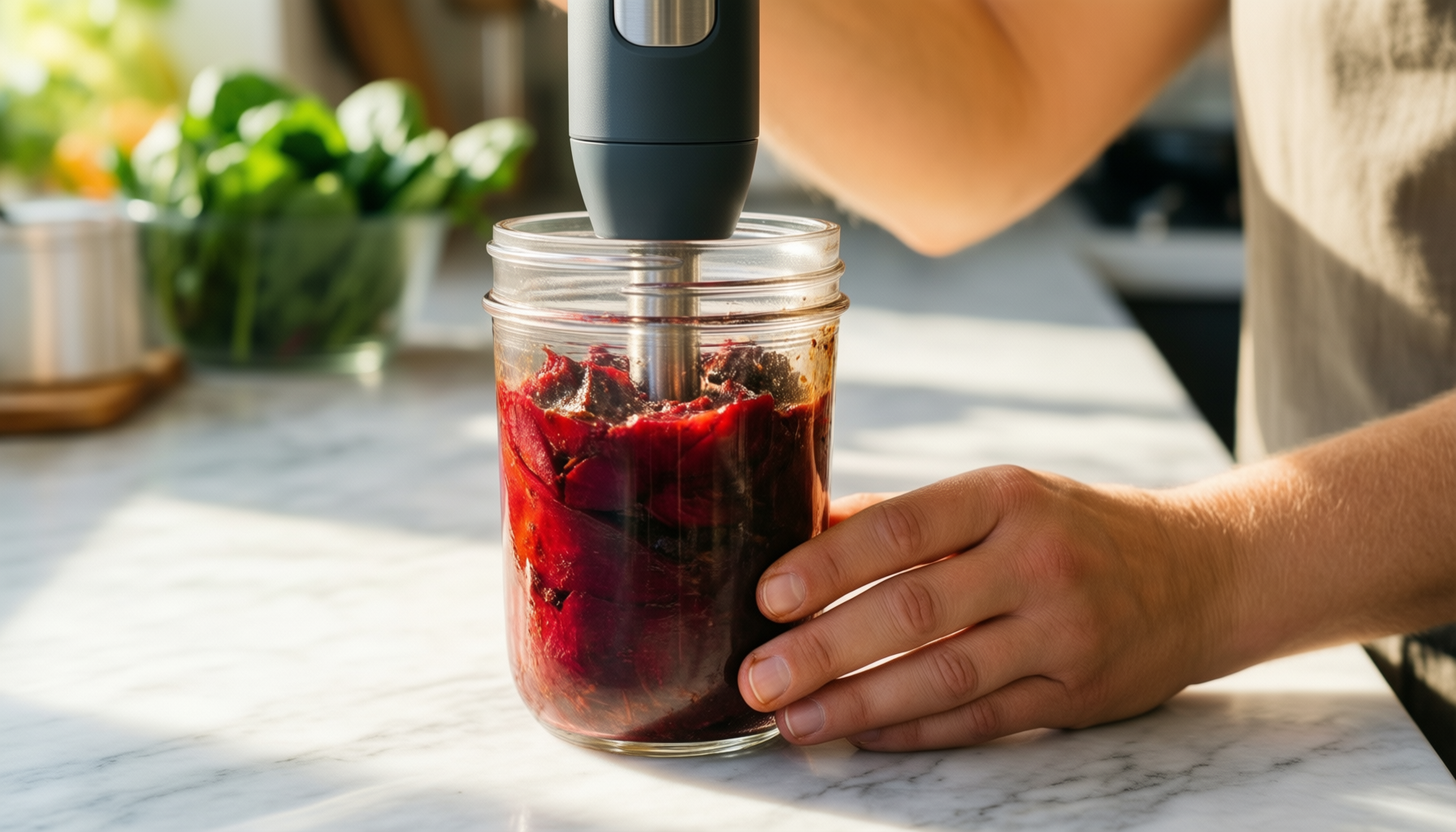
This cordless immersion blender addresses the specific friction of preparing small-batch purees and smoothies without hunting for a wall socket. Its standout feature is the twistable head with three fixed angles (90°, 135°, and 180°), which allows the stainless steel blades to reach the corners of awkwardly shaped containers. A notable limitation is that the battery life, while sufficient for quick tasks, may require frequent recharging if used for heavy, continuous blending sessions. This model is best for parents preparing baby food in small batches or individuals who value portability over raw power.
The device is designed for intermittent use rather than continuous, high-load operation. The rechargeable lithium-ion battery provides optimal runtime for typical household tasks, such as blending a single smoothie or a small batch of soup. However, the exact runtime varies depending on the speed setting and the density of the ingredients. High-speed blending consumes more power, reducing the total number of uses per charge. Users should be aware that the battery indicator light will flash when it is time to charge, providing a clear signal to stop using the device.
🛒 Check Price on Amazon →✓ See today's price & reviews
For buyers who regularly blend large volumes of soup or heavy doughs, a traditional mains-powered stick blender is the more suitable choice. The motor power in this cordless model is balanced against battery efficiency, meaning it is not designed to run at maximum speed for extended periods. If the primary use case is blending thick, frozen ingredients or large quantities of raw vegetables, the battery may not sustain the required speed for the duration of the task. A traditional blender with a direct power connection does not have this limitation and can run indefinitely as long as the outlet is available.
Blending Baby Food Without the Wall Socket
The primary pain point this device addresses is the logistical difficulty of preparing single-serve meals while managing a child. Traditional stick blenders require a fixed power source, forcing the user to remain tethered to a specific outlet. This cordless immersion blender removes that constraint, allowing the user to move the container to a stable surface away from the main kitchen counter. For parents who often have one hand occupied, the ability to blend in a location that offers better stability or visibility is a significant workflow improvement.
The detachable design further supports this use case by allowing the blade assembly to be separated from the motor unit. This separation is crucial for hygiene when handling baby food, as it allows for thorough cleaning of the blade area without risking water damage to the motor housing. The stainless steel blades are designed to handle the soft textures of pureed vegetables and fruits effectively. This specific configuration makes it easier to prepare small quantities without the hassle of managing a long, heavy cord that can tangle or pose a tripping hazard in a busy kitchen.
The ergonomic handle is designed to be held comfortably during these short, frequent blending sessions. The twist button mechanism allows for quick angle adjustments, which is particularly useful when blending in small jars or bottles that do not have a flat bottom. Unlike larger countertop blenders that require a dedicated space, this handheld unit can be stored in a drawer or cupboard when not in use. This compact nature ensures that the tool is always accessible for the quick, small-batch tasks that define daily baby food preparation.
The Twistable Head Mechanism
The 3-angle adjustable head is a specific mechanical feature that differentiates this model from standard straight-stick blenders. The 90-degree position allows the blades to operate parallel to the bottom of a container, which is ideal for scraping up the last remnants of a puree. The 135-degree and 180-degree positions provide flexibility for different container depths. This mechanical versatility means the user does not need to tilt the entire unit awkwardly to reach the edges of a bowl.
One-Handed Operation Ergonomics
The design prioritizes a grip that can be managed with one hand, which is essential for users who may need to hold a child or a container with the other. The weight distribution is centered around the handle, providing balance during operation. The USB rechargeable nature means there is no bulky power brick attached to the unit, keeping the profile slim. This slim profile is critical for fitting into narrow spaces, such as between other kitchen appliances or in a small cupboard.
Who Should Skip the Cordless Model for a Traditional Stick Blender
Buyers who regularly blend large volumes of soup or heavy doughs should consider a traditional mains-powered stick blender. The rechargeable lithium-ion battery in this cordless immersion blender is designed for intermittent use rather than continuous, high-load operation. Blending large batches of dense ingredients can drain the battery quickly, potentially leaving the user mid-task. For those who cook for large families or cater regularly, the consistent power draw of a plugged-in unit is more reliable.
Users who prefer the uninterrupted power of a mains-powered unit for daily high-volume cooking will find the cordless model limiting. The 21-speed control offers precision, but the motor power is balanced against battery efficiency. If the primary use case is blending thick, frozen ingredients or large quantities of raw vegetables, the battery may not sustain the required speed for the duration of the task. A traditional blender with a direct power connection does not have this limitation and can run indefinitely as long as the outlet is available.
Situations where the convenience of portability does not outweigh the need for sustained power are also candidates for skipping this model. If the kitchen has ample outlets and the user rarely moves between rooms, the cordless feature offers little practical benefit. The added complexity of managing battery charge levels and USB charging adds a maintenance step that is unnecessary for users who are stationary. For these users, a standard stick blender provides a simpler, more robust solution for heavy-duty blending tasks.
Balancing 21-Speed Precision with Portability in a Modern Kitchen
The 21-speed variable control is a key feature for texture management in diverse recipes. Smoothies often require a higher speed to break down ice or frozen fruit, while soups may benefit from a lower speed to maintain a smooth, non-aerated consistency. The ability to adjust the speed seamlessly allows the user to start at a low setting and increase as needed. This precision is particularly useful for achieving a specific texture in baby food, where a slightly chunkier consistency might be preferred for older infants.
The trade-off between motor power and battery capacity is evident in the design of this handheld blender. To keep the unit lightweight and portable, the battery size is limited. This means that while the motor is powerful enough for most tasks, it is not designed to run at maximum speed for extended periods. The white aesthetic of the unit fits well into contemporary kitchen aesthetics, often matching other small appliances. The 3-angle adjustability adds an ergonomic layer that complements the visual design, making the tool both functional and visually cohesive.
The detachable design also contributes to the portability aspect by allowing the unit to be stored in a compact form. The main body can be wiped clean with a soft damp cloth, while the blade is dishwasher safe. This ease of cleaning is a significant factor in maintaining hygiene, especially when switching between different ingredients. The USB charging cable included with the product ensures that the user can charge the device using standard household outlets or power banks. This flexibility in charging methods enhances the portability of the unit, making it suitable for use in various locations within the home.
Speed Control for Texture Control
The variable speed technology allows for fine-tuned control over the blending process. For example, when making a marinade, a lower speed can be used to emulsify ingredients without over-blending them. When making a smoothie, a higher speed can be used to ensure a smooth, lump-free texture. This level of control is difficult to achieve with single-speed blenders, which often force the user to choose between under-blending and over-blending. The 21-speed range provides a wide spectrum of options, catering to different ingredient densities and desired outcomes.
Aesthetic and Ergonomic Integration
The white color scheme of this cordless immersion blender is designed to blend into modern kitchen environments. It avoids the visual clutter of black or metallic appliances, offering a clean, minimalist look. The ergonomic handle is shaped to fit the natural curve of the hand, reducing fatigue during use. The twist button for angle adjustment is located on the handle, allowing for easy operation without looking at the unit. This intuitive design ensures that the user can adjust the angle quickly and accurately, even when wearing gloves or with wet hands.
Battery Life Realities: From First Charge to Long-Term Use
The battery life of this cordless immersion blender is a critical factor in its daily usability. The rechargeable lithium-ion battery provides optimal runtime for typical household tasks, such as blending a single smoothie or a small batch of soup. However, the exact runtime varies depending on the speed setting and the density of the ingredients. High-speed blending consumes more power, reducing the total number of uses per charge. Users should be aware that the battery indicator light will flash when it is time to charge, providing a clear signal to stop using the device.
Charging is done via a USB cable, which is included with the product. This standard charging method allows the user to use a variety of power sources, including wall adapters, computer USB ports, or power banks. The charging time is not specified in the product description, but users should expect a reasonable wait time to fully recharge the battery. It is advisable to charge the device after each use to ensure it is ready for the next task. Managing battery degradation over time is important, as lithium-ion batteries lose capacity with age and repeated charging cycles.
Proper storage of the device can help maintain battery health. Storing the unit in a cool, dry place and avoiding extreme temperatures can extend the life of the battery. The detachable design allows the user to store the blade and motor unit separately, which can be useful in small kitchen spaces. The battery indicator light serves as a useful reminder to charge the device, preventing unexpected power loss during use. Users should be mindful of the battery level before starting a task, especially if they are preparing multiple items in a row.
Charging Convenience and USB Compatibility
The inclusion of a USB cable simplifies the charging process, eliminating the need for a proprietary charger. This standardization means that the user can use existing USB cables and adapters, reducing the clutter of multiple charging devices. The USB charging method is also energy-efficient, using less power than traditional AC chargers. This makes it a convenient option for users who travel or use the device in locations with limited power outlets. The ease of charging contributes to the overall user experience, making the device more accessible and user-friendly.
Long-Term Battery Maintenance
To maximize the lifespan of the battery, users should avoid letting the battery drain completely before recharging. Partial charges are generally better for lithium-ion batteries than full discharges. The battery indicator light helps users monitor the charge level, allowing them to recharge the device before it runs out. Regular maintenance, such as keeping the charging port clean and free of debris, can also help ensure reliable charging. By following these simple guidelines, users can extend the functional life of the cordless immersion blender and maintain its performance over time.
Noise Levels and Kitchen Etiquette: Blending Without Disrupting the Household
The noise level of a blender is a significant consideration for households with shared living spaces or open-plan kitchens. Cordless immersion blenders often operate at lower decibel levels than their mains-powered counterparts, primarily due to the smaller motor size and the lack of a large base unit. This cordless immersion blender is designed to provide powerful blending while maintaining a reasonable noise profile. The variable speed control allows the user to select a lower speed for quieter operation, which is useful during early morning or late night use.
The impact of motor design on noise output is evident in the smooth operation of the high-speed motor. The 21-speed control allows for a gradual increase in speed, which can help reduce sudden noise spikes. This gradual blending process is less disruptive to the household environment compared to a single-speed blender that operates at a constant, loud volume. For families with young children or light sleepers, the ability to blend quietly is a valuable feature. The detachable design also allows for easier cleaning, which can be done quietly without the need for loud running water.
Why quieter operation is a key factor for shared living spaces is clear in the context of modern apartment living. Open-plan kitchens often serve as living, dining, and working spaces, making noise a significant consideration. A quieter blender allows the user to prepare food without disturbing others in the household. The ergonomic design of the handle also contributes to a more controlled blending process, reducing the likelihood of accidental splashes or spills that can create additional noise. By choosing a cordless model with variable speed control, users can balance power and noise to suit their specific household needs.
UK Voltage Compatibility and Plug Safety for Imported Models
Ensuring the device is rated for 230-240V UK mains voltage is a critical safety consideration for imported models. This cordless immersion blender is designed for use in the UK market, meaning it should be compatible with standard UK electrical outlets. The USB charging cable included with the product is designed to work with standard UK USB adapters. Users should verify that the charging adapter they use is rated for UK voltage to ensure safe and reliable charging.
The importance of using the correct UK plug adapter for charging safety cannot be overstated. Using an incompatible adapter can lead to electrical hazards, including overheating or fire. The USB charging method provides a layer of safety by isolating the battery from the mains supply. However, users should still use a certified USB adapter that meets UK safety standards. The detachable design of the blender allows for easy storage of the charging cable, reducing the risk of tripping or tangling.
Common pitfalls with imported cordless blenders and their charging accessories include using non-certified adapters or cables. Users should always use the included USB cable or a certified replacement to ensure safe charging. The battery indicator light provides a visual cue for charging status, helping users avoid overcharging or undercharging the battery. By following these safety guidelines, users can enjoy the convenience of a cordless immersion blender without compromising on safety. The white aesthetic of the unit also makes it easy to identify any damage or wear on the charging port, allowing for timely maintenance.
Final Verdict: Who This Blender Is For
This cordless immersion blender is a specialized tool designed for specific workflows rather than general-purpose heavy duty use. It is the ideal choice for parents preparing small batches of baby food, individuals who need to blend in locations without immediate access to a wall socket, or users who prioritize a slim, portable profile for storage in tight kitchen spaces. The 21-speed control and 3-angle head provide the precision needed for texture management in smoothies, soups, and purees, while the detachable design ensures easy cleaning and hygiene.
However, this model is not suitable for users who require sustained, high-power blending for large volumes of dense ingredients. If your primary cooking tasks involve large family meals, heavy doughs, or continuous blending of frozen items, the battery limitations of this unit will be a hindrance. For these users, a traditional mains-powered stick blender offers the consistent power and reliability needed for heavy-duty tasks without the need to manage charge levels.
Who Should Skip This
- High-Volume Cooks: If you regularly blend large batches of soup, stews, or doughs, the battery will drain too quickly for continuous use. A mains-powered unit is more reliable for these tasks.
- Stationary Kitchen Users: If your kitchen has ample outlets and you rarely move between rooms, the portability of this cordless model offers little practical benefit. The added step of managing USB charging is unnecessary if you are always near a power source.
- Users Requiring Maximum Power: If your primary use case involves blending thick, frozen ingredients or very dense raw vegetables at high speeds for extended periods, the motor and battery combination of this unit may not sustain the required performance.
🛒 Check Price on Amazon →✓ See today's price & reviews