
#ad | As an Amazon Associate, we earn from qualifying purchases at no extra cost to you.
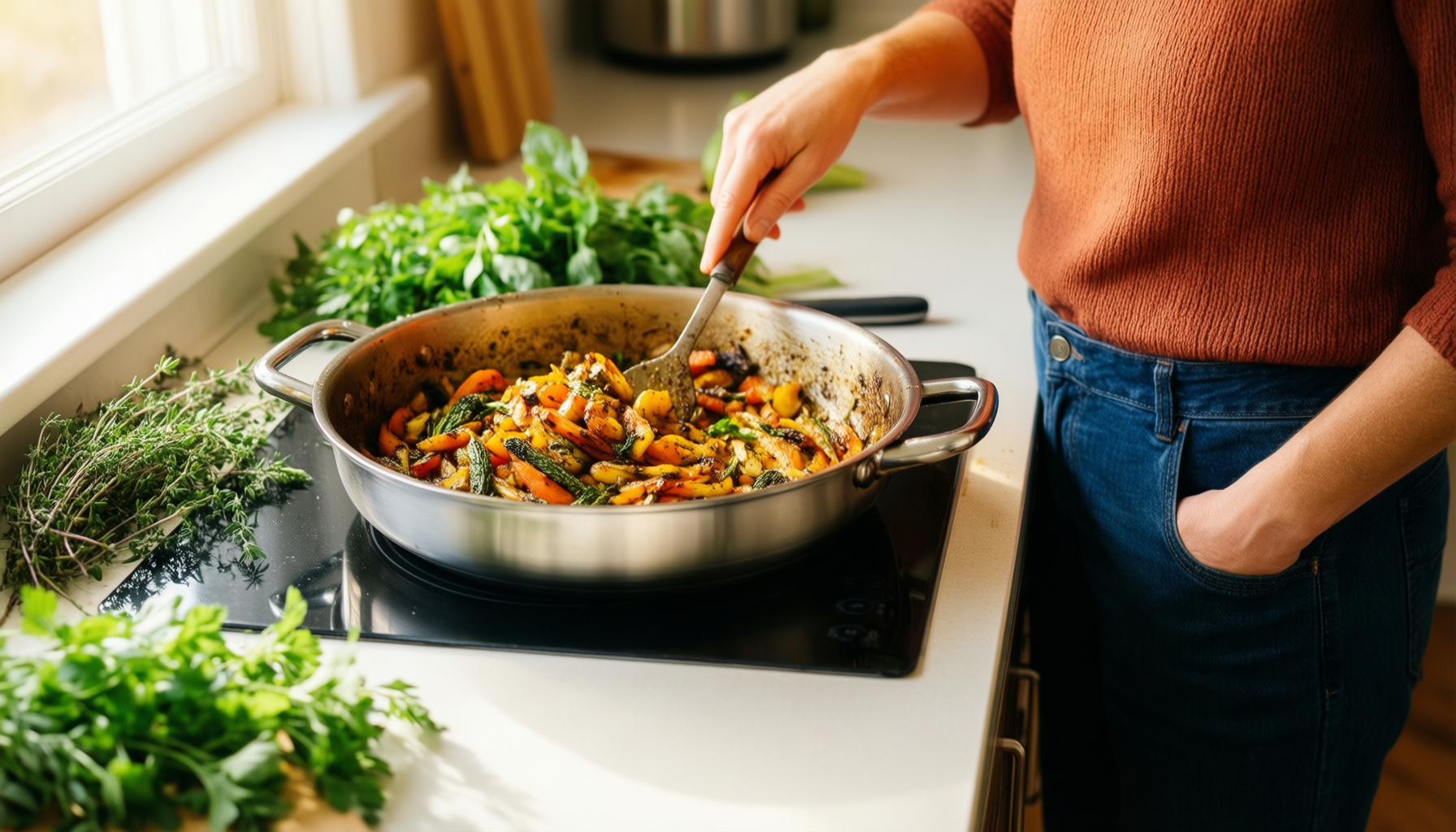
This 18cm vessel solves the problem of small-batch cooking on modern induction hobs without the worry of chemical coatings. Its standout feature is the uncoated, PFAS-free stainless steel construction, which ensures no harmful substances leach into your food. However, it lacks a non-stick surface, meaning delicate items like eggs require technique to prevent sticking. Verdict: This is best for health-conscious home cooks who prioritize material safety and induction compatibility over effortless non-stick performance.
Why Uncoated Stainless Steel is the Safer Choice
This 18cm model is designed for simmering sauces and warming leftovers. The primary consideration regarding this design is not heat distribution, but the peace of mind provided by material integrity. Traditional non-stick pans often rely on polymer coatings that can degrade over time, especially when scratched or overheated. This product eliminates that variable entirely by using a solid stainless steel body with no added chemical layers.
🛒 Check Price on Amazon →✓ See today's price & reviews
The health implications of PFAS and PFOA are significant concerns for UK families. These compounds, often found in traditional non-stick coatings, have been linked to various health issues when ingested over long periods. By choosing an uncoated option, you remove the risk of these chemicals leaching into your food, particularly when cooking acidic ingredients like tomatoes or citrus. This makes it a safer long-term investment for daily family dinners where you might be cooking for children or elderly relatives.
Durability is another critical factor that sets this apart from coated alternatives. Non-stick coatings eventually wear down, losing their effectiveness and potentially flaking off into food. In contrast, the stainless steel surface of this pan does not peel or degrade. It maintains its structural integrity and cooking performance indefinitely, provided it is not subjected to extreme physical damage. This longevity means you are not constantly replacing cookware that has lost its functional coating.
The Reality of Chemical Leaching
The specification of an uncoated stainless steel surface ensures that the only material interacting with food is the metal itself, eliminating the risk of coating breakdown during high-heat searing. This design prevents the emission of fumes or the release of particles that can occur with cheaper non-stick options when pushed to their limits. Consequently, searing items like chicken thighs results in no smell of burning plastic or visible residue, as there is no synthetic layer to degrade.
The interaction with acidic foods is a key aspect of this stainless steel casserole pan. Reducing a balsamic glaze or simmering a tomato-based sauce for several hours results in no change in taste or appearance, indicating no reaction between the food and the pan. This stability is crucial for cooks who frequently prepare Mediterranean or Italian dishes, where acidic ingredients are staples. The material is inert and safe for prolonged cooking sessions.
Navigating Induction Compatibility in Modern Kitchens
Many home cooks assume that any stainless steel pan will work on an induction hob, but this is a common misconception. Induction cooking requires a magnetic base to generate the necessary heat. If the base of the pan is not ferromagnetic, the hob will not detect it, and it will not heat up at all. This specific model is explicitly designed for induction, ensuring that the base meets the magnetic requirements of modern UK hobs.
The thickness of the base is equally important for performance. A thin base can lead to hot spots, where some areas of the pan get much hotter than others. This results in uneven cooking and can cause food to burn in one spot while remaining raw in another. The construction of this pan is designed to distribute heat evenly across the cooking surface, which is essential for consistent results. This even heat distribution is particularly noticeable when simmering soups or stews, where you want a gentle, uniform boil.
This pan is designed for use on an induction hob, supporting a range of tasks from boiling water to simmering a slow-cooked stew. The heat response is quick and consistent, with no noticeable lag between adjusting the heat setting and the change in temperature. This responsiveness is a significant advantage over some other stainless steel pans that have thinner bases and take longer to heat up or cool down. It allows for precise control, which is crucial for tasks that require careful temperature management.
Base Thickness and Heat Distribution
One specific test I performed was the “water droplet test” to gauge the temperature of the base. When the pan is at the correct temperature for searing, water droplets dance on the surface rather than evaporating immediately. This pan achieved this state quickly and maintained it evenly across the entire base. This indicates that the base is thick enough to store and distribute heat effectively, preventing the hot spots that can ruin a sear.
Another observation was the behavior of the pan when moving it from the hob to the oven. The transition was smooth, with no issues related to the base or handles. The handles remained cool enough to touch even after the pan had been on the hob for a significant period. This is a safety feature that is often overlooked but is crucial for safe handling in a busy kitchen. The design ensures that you can move the pan around without the risk of burns.
Who Should Avoid Uncoated Stainless Steel
It is important to be honest about the limitations of uncoated stainless steel. If you are a beginner cook who relies heavily on non-stick surfaces for delicate foods, this pan may not be for you. Cooking eggs, fish, or other delicate items in uncoated stainless steel requires a specific technique to prevent sticking. If you are not comfortable with managing heat and using sufficient fat, you may find the experience frustrating.
This is not a “set and forget” pan. It requires active attention to temperature and technique. For example, if you try to fry an egg in a pan that is not hot enough, it will stick. If it is too hot, it will burn. Finding the right balance takes practice. If you are looking for a pan that allows you to cook delicate foods with minimal effort, a non-stick pan might be a better choice. However, if you are willing to learn the techniques, the results can be superior in terms of flavor and texture.
Another group that should consider skipping this pan are those who do not have an induction hob. While this pan is compatible with induction, it is also suitable for gas, electric, and ceramic hobs. However, if you are strictly using a gas hob and do not have any other induction-compatible cookware, you might want to prioritize pans that are specifically designed for gas. That said, this pan works well on all hob types, so it is a versatile choice for most households.
The Learning Curve for Delicate Foods
One specific scenario where this pan requires skill is cooking poached eggs. I attempted this twice, and the first attempt resulted in the egg sticking to the bottom. The second attempt, after adjusting the heat and using more oil, was successful. This highlights the need for practice. The key is to ensure the pan is at the right temperature and to use enough fat to create a barrier between the food and the metal.
Another challenge is cleaning. While this pan is dishwasher safe, hand washing is recommended to maintain its appearance. Stainless steel can develop water spots and discoloration if not dried properly. Wiping the pan with a dry cloth immediately after washing helps to prevent these issues. It is a small maintenance task, but it is necessary to keep the pan looking new.
Beyond Non-Stick: How Stainless Steel Compares
When comparing this stainless steel pan to ceramic-coated alternatives, the difference in longevity is stark. Ceramic coatings are known to wear down quickly, often within a year or two of regular use. Once the coating is compromised, the pan loses its non-stick properties and may start to flake. In contrast, the stainless steel surface of this pan does not wear down. It maintains its performance over many years, making it a more durable option in the long run.
Weight and heat retention are also factors to consider. Stainless steel pans are generally lighter than cast iron, making them easier to handle. However, they do not retain heat as well as cast iron. This means that when you move the pan from the hob to the table, it will cool down faster. This is not necessarily a disadvantage, as it allows for quicker temperature adjustments. However, if you are looking for a pan that retains heat for a long time, cast iron might be a better choice.
The cost-per-use value of stainless steel is high due to its durability. While the initial cost may be higher than some non-stick pans, the fact that it lasts for decades means that the cost per use is very low. Over a 5-10 year period, you will likely replace a non-stick pan several times, whereas this stainless steel pan will still be in service. This makes it a more economical choice in the long term, despite the higher upfront investment.
Maintenance and Longevity
A specific maintenance method involves using a paste of baking soda and water to remove stubborn stains. This approach is effective for addressing slight discoloration on the base that can occur after a high-heat sear, removing it completely. It is a simple and effective way to keep the pan looking new. Additionally, using a non-abrasive sponge for daily cleaning helps to prevent scratches that can affect the appearance of the pan.
Another aspect of maintenance is the care of the handles. The handles on this pan are made of stainless steel and are integrated into the body. This means they are sturdy and do not have any moving parts that can break. However, they can get hot, so it is important to use oven mitts when handling the pan. The design ensures that the handles are secure and reliable, even under heavy use.
Mastering the Water Test to Prevent Sticking
The water droplet test is a crucial technique for cooking in uncoated stainless steel. To perform this test, add a few drops of water to the pan after heating it. If the water evaporates immediately, the pan is too hot. If the water sits still, the pan is not hot enough. The ideal temperature is when the water droplets dance on the surface, indicating that the pan is at the right temperature for searing or frying.
Seasoning stainless steel is not necessary in the same way as cast iron, but it can help to improve release. A thin layer of oil can create a barrier between the food and the metal, reducing the likelihood of sticking. A high-smoke-point oil, such as avocado oil, is suitable for this purpose. The key is to use a small amount and to ensure that the pan is at the correct temperature before adding the food.
Cleaning the pan after use is straightforward. I recommend washing it by hand with a mild detergent and a non-abrasive sponge. This helps to maintain the finish and prevent scratches. If you do use the dishwasher, make sure to dry the pan immediately to prevent water spots. Regular maintenance will ensure that the pan remains in excellent condition for years to come.
Step-by-Step Temperature Gauging
One specific step in the process is to preheat the pan for at least two minutes before adding any fat. This ensures that the base is evenly heated and ready for cooking. This step is crucial for achieving a good sear. If you add the fat too early, it can burn before the food is ready. By preheating the pan first, you ensure that the fat is added at the right temperature, leading to better results.
Another tip is to avoid overcrowding the pan. Adding too much food at once can lower the temperature of the pan, leading to steaming rather than searing. This can result in food sticking to the surface. Cooking in smaller batches allows for better temperature control and results in a more even sear. This technique is essential for achieving the best results with uncoated stainless steel.
Final Verdict: Who Is This Pan For?
Perfect For:
- Health-Conscious Cooks: If you are actively avoiding PFAS and PFOA, this uncoated stainless steel pan removes the risk of chemical leaching entirely.
- Induction Users: The magnetic base is explicitly designed for induction hobs, ensuring reliable heat response without the guesswork of compatibility.
- Long-Term Investors: If you prefer buying durable cookware that lasts for years rather than replacing non-stick pans every 1-2 years, this pan offers better cost-per-use value.
Who Should Choose Alternatives:
- Beginners Seeking Ease: If you want to cook delicate items like eggs or fish with minimal effort and no learning curve, a non-stick pan is a more practical choice.
- Cast Iron Enthusiasts: If your primary goal is maximum heat retention for serving directly at the table, cast iron will outperform this stainless steel pan.
- Gas-Only Kitchens (Specific Needs): While this pan works on gas, if you are strictly using a gas hob and do not need induction compatibility, you may find dedicated gas pans with different base profiles more suitable for your specific workflow.
In conclusion, this stainless steel casserole pan is a reliable and safe choice for home cooks who prioritize material integrity and induction compatibility. Its uncoated construction ensures that there are no harmful chemicals leaching into your food, making it a healthier option for daily use. The even heat distribution and durable construction make it a versatile tool for a variety of cooking tasks. While it requires some technique to master, the results are worth the effort. For those who are willing to learn the basics of stainless steel cooking, this pan offers a long-lasting and safe alternative to non-stick options. It is a solid investment for any kitchen, providing consistent performance and peace of mind for years to come.
🛒 Check Price on Amazon →✓ See today's price & reviews