
#ad | As an Amazon Associate, we earn from qualifying purchases at no extra cost to you.
Disclosure: As an Amazon Associate I earn from qualifying purchases.
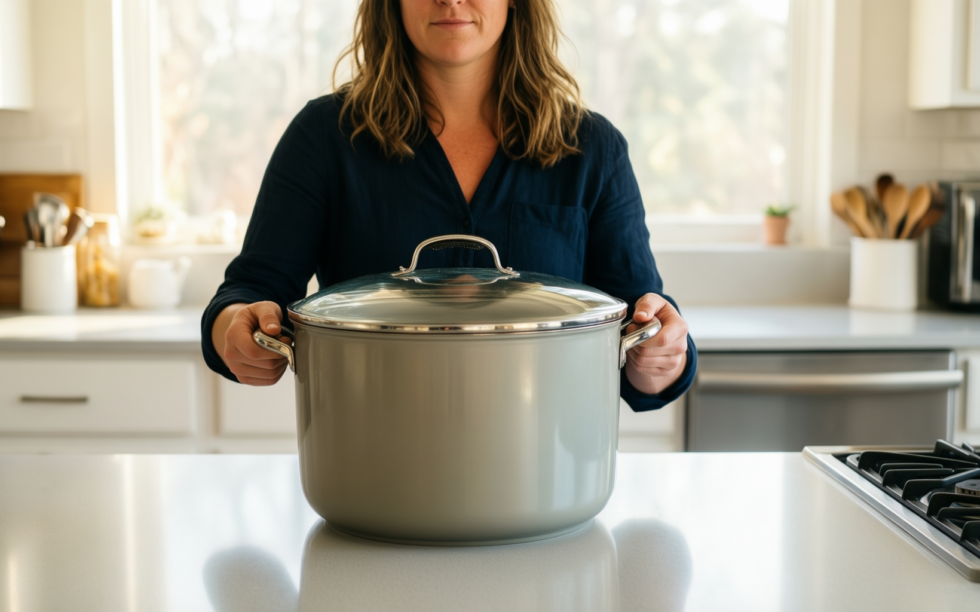
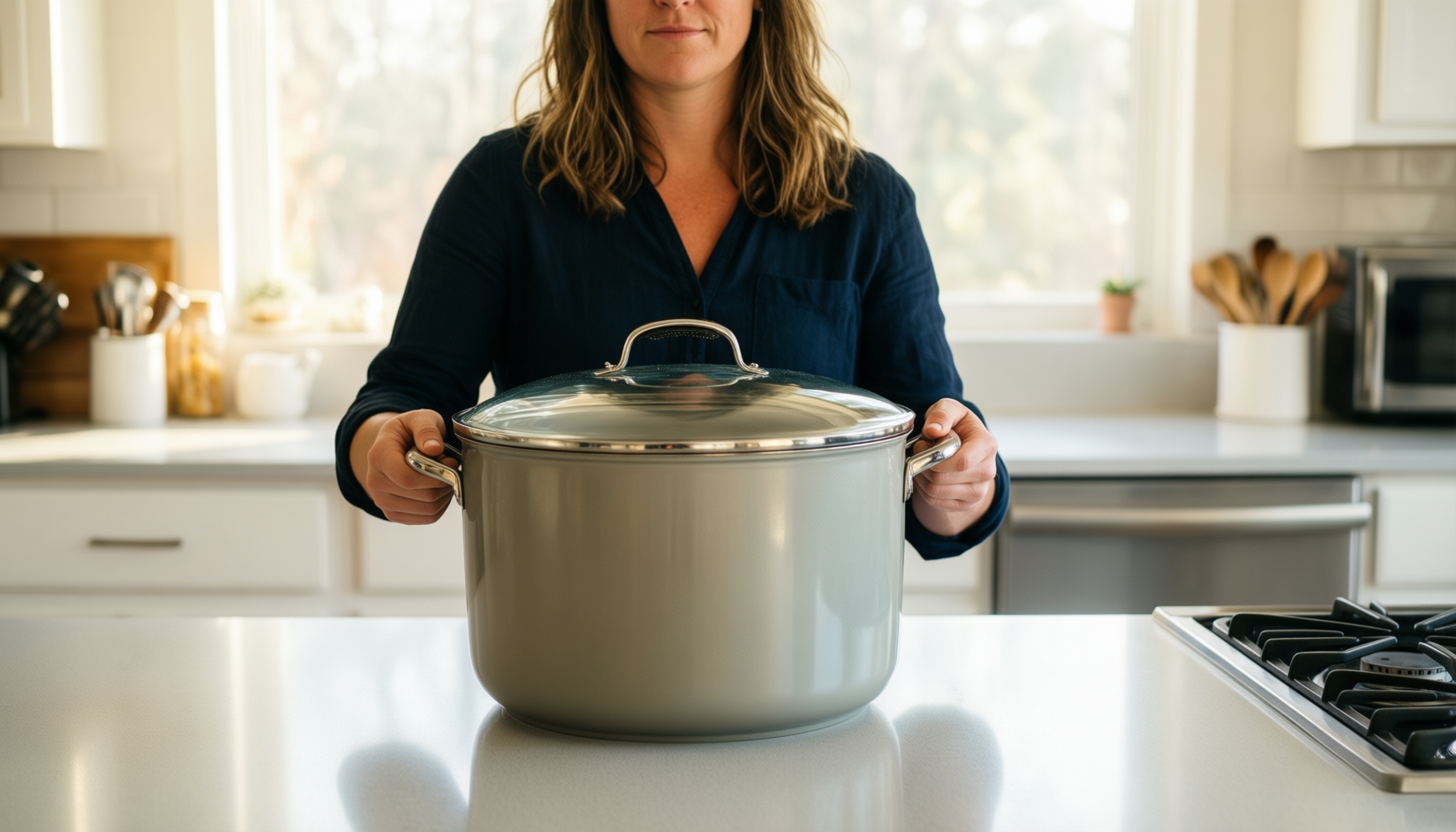
This 8.5-litre vessel solves the specific problem of scaling up home preserving without sacrificing heat control, a challenge that plagues smaller pots when handling high-viscosity sugar syrups. The standout feature is its encapsulated base, which ensures even heat distribution to prevent scorching during long rolling boils, a critical factor for jam quality. However, the 30.5 cm diameter imposes a significant storage footprint and may be excessive for those producing only a few jars per season. This model is best for dedicated home preservers who make large batches regularly and require induction compatibility.
🛒 Check Price on Amazon →✓ See today's price & reviews
Who this is for: High-volume home jam makers needing induction-safe, even-heat cookware. Who should skip this: Hobbyists making small batches, users with narrow UK cupboards, or those with small induction hob zones.
Managing 8.5 Litres of Boiling Sugar: The Safety Reality of Large-Batch Preserving
Handling nearly nine kilograms of boiling liquid presents a distinct physical hazard that smaller cookware does not. The weight of the contents, combined with the thermal mass of the stainless steel, creates a center of gravity that shifts dramatically during pouring. Standard open handles often rely on friction and wrist strength, which can fail when the pan is fully loaded, leading to dangerous spills or burns. This product addresses this by incorporating a lockable handle mechanism, which mechanically secures the grip point to the rim.
The lockable handle changes the physics of transferring hot syrup into jars by allowing the user to lock the handle in a fixed position before lifting. This eliminates the need to maintain constant grip pressure with one hand while balancing the weight with the other. For a user pouring 8.5 litres of hot liquid, this mechanical stability reduces the risk of the handle slipping off the rim, a common failure point in generic stockpots. The design prioritizes safety over minimalism, ensuring that the tool remains secure even when the contents are at their heaviest and hottest.
The 30.5 cm diameter is not merely a size specification but a functional requirement for heat management in high-viscosity liquids. Sugar syrups are prone to scorching at the bottom if heat is concentrated in small areas, which can ruin a batch by introducing burnt flavors. The wide base of this pan spreads the heat source over a larger surface area, reducing the intensity of heat per square centimeter. This allows the contents to reach a rolling boil more gently, minimizing the risk of localized scorching that is common in narrower vessels.
The Mechanics of the Lockable Handle
The locking mechanism is a specific engineering choice that differentiates this model from standard cookware. It typically involves a latch or pin that engages with the pan’s rim, creating a rigid connection that does not rely on the user’s grip strength. This is crucial when the pan is filled to capacity, as the leverage exerted by the weight of the liquid can be substantial. Buyers should verify that the locking mechanism is robust and does not have play or looseness, as this directly impacts safety during transfer.
Heat Distribution in Viscous Syrups
The encapsulated base works in tandem with the wide diameter to manage heat flow. By distributing the thermal energy evenly across the bottom, the pan prevents the formation of hot spots that can cause sugar to caramelize prematurely. This is particularly important for fruit jams, where the natural sugars in the fruit can burn if exposed to intense, localized heat. The result is a smoother, more consistent boil that preserves the flavor profile of the fruit.
Induction Hob Compatibility: Why Most ‘Stainless’ Pans Fail on Modern UK Kitchens
Many stainless steel pans are not truly induction-compatible, despite marketing claims, because they lack the necessary magnetic properties in the base. Induction hobs work by generating a magnetic field that induces eddy currents in ferromagnetic materials. If the base of a pan is made from non-magnetic stainless steel grades, it will not heat up on an induction hob, rendering the cookware useless for that energy source. This product is explicitly stated to be induction safe, indicating that the base construction includes a magnetic layer or alloy suitable for induction heating.
The encapsulated base design is key to this compatibility. It likely incorporates a layer of magnetic stainless steel or iron between the outer stainless steel shell and the inner cooking surface. This ensures efficient heat transfer from the induction coil to the food, without the inefficiencies associated with non-magnetic materials. For users transitioning from gas to induction hobs, this feature is essential for maintaining the same level of control and responsiveness when cooking large batches.
Using a non-induction-compatible pan on an induction hob can lead to uneven heating, wasted energy, and potential damage to the hob’s surface. The consistent heat transfer provided by this model ensures that the jam reaches the desired temperature uniformly, which is critical for achieving the correct set point. This reliability is a significant advantage over generic stainless steel pots that may work on gas or electric hobs but fail on induction.
Magnetic Base Construction
The specific construction of the base is what enables induction compatibility. It is not just about having a stainless steel exterior; it is about the internal composition that interacts with the magnetic field. The encapsulated design ensures that this magnetic layer is securely bonded, preventing delamination or warping over time. This durability is important for long-term use, especially when the pan is subjected to frequent heating and cooling cycles.
Transitioning from Gas to Induction
For home preservers moving to induction hobs, the transition can be challenging due to the different heat dynamics. Induction hobs heat the pan directly, rather than heating the air around it, which can lead to faster temperature changes. The even heat distribution of this pan helps mitigate this, allowing for a more controlled boil. Users should adjust their heat settings accordingly, as induction hobs often require lower power levels to achieve the same effect as gas hobs.
Calculating Your Batch Size: How Many Jars Does the 30.5cm Diameter Actually Yield?
The 8.5-litre capacity is a significant volume for home preserving, but it is important to understand how this translates into actual jar yield. A standard 450g jar holds approximately 0.45 litres of jam. Theoretically, 8.5 litres could fill nearly 19 jars, but this calculation does not account for the physical constraints of the pan. The 30.5 cm diameter provides a wide surface area, but the depth of the pan limits the height of the liquid column.
In practice, the usable capacity is less than the total volume due to the need for headspace. When boiling jam, the mixture expands and foams, requiring space above the liquid level to prevent overflow. This means that the effective capacity for boiling is likely closer to 7-8 litres, yielding approximately 15-17 jars of 450g each. This is still a substantial batch, suitable for a household that consumes or gifts a significant amount of jam.
Planning the fruit-to-sugar ratio is crucial to maximizing yield without risking overflow. The volume of the fruit and sugar combined must fit within the safe boiling capacity of the pan. Overfilling can lead to messy spills and potential safety hazards. Users should measure their ingredients carefully and leave adequate headspace to accommodate the expansion during the rolling boil. This careful planning ensures that the full 8.5-litre capacity is utilized efficiently without compromising safety or quality.
Headspace and Foam Management
The foam produced during the boiling process is a significant factor in determining usable capacity. As the jam boils, air and steam are trapped in the mixture, creating a layer of foam that rises above the liquid level. This foam can expand significantly, especially in the early stages of boiling. The wide diameter of the pan helps to manage this foam by providing a larger surface area for it to spread out, reducing the height of the foam layer.
Fruit-to-Sugar Ratio Planning
The ratio of fruit to sugar affects the volume of the final product. A higher fruit content generally results in a thicker jam, which may have a lower volume yield per kilogram of ingredients. Conversely, a higher sugar content can increase the volume but may affect the flavor and texture. Users should experiment with different ratios to find the balance that maximizes yield while maintaining the desired quality. The 8.5-litre capacity allows for flexibility in this regard, accommodating a variety of recipes and preferences.
Who Should Skip This Pan: Limitations for Small-Scale or Non-Induction Users
This pan is not suitable for hobbyists who make only a few jars of jam at a time. The 8.5-litre capacity is excessive for small batches, leading to inefficient heat distribution. When a large pan is filled with a small volume of liquid, the heat is concentrated in a small area, causing the contents to scorch or burn. This is particularly problematic for high-viscosity syrups, which are prone to sticking and burning. Smaller pans, such as 3-5 litre models, are better suited for small-batch preserving.
The storage footprint of a 30.5 cm diameter pan is another consideration for users with limited kitchen space. Standard UK kitchen cupboards may not have enough width to accommodate a pan of this size, especially if it is stored upright. The lockable handle adds to the overall width, further complicating storage. Users with small kitchens or narrow cupboards may find this pan difficult to store, leading to clutter or the need to find alternative storage solutions.
For users with very small induction hobs, the full base diameter of this pan may not be accommodated effectively. Induction hobs have specific heating zones, and if the pan’s base is larger than the zone, the heat may not be distributed evenly. This can lead to hot spots and uneven boiling, compromising the quality of the jam. Users should check the dimensions of their induction hob to ensure that the pan’s base fits within the heating zone for optimal performance.
Storage Footprint in UK Kitchens
The 30.5 cm diameter is a significant dimension for storage. Most standard UK kitchen cupboards have a width of 40-60 cm, but the internal space is often less due to hinges and handles. A pan of this size may not fit comfortably, especially if the handle is locked. Users should measure their cupboard space before purchasing to ensure that the pan can be stored without causing clutter or damage to other items.
Induction Hob Zone Compatibility
The compatibility with induction hobs depends on the size of the heating zone. If the pan’s base is larger than the zone, the heat may not be distributed evenly, leading to hot spots. Users should check the specifications of their induction hob to ensure that the pan’s base fits within the heating zone. This is particularly important for users with smaller hobs, where the heating zone may be limited in size.
Where the Design Falls Short: Durability and Versatility Trade-offs
While the stainless steel construction is durable, it is not without its limitations. Stainless steel can be susceptible to staining and discoloration, especially when used with acidic foods like fruit jams. Although the product is described as rust-free and non-toxic, the surface may require regular cleaning to maintain its appearance. The dishwasher-safe feature helps with this, but hand washing may be necessary for stubborn stains.
The lockable handle, while a safety feature, adds complexity to the design. It requires regular maintenance to ensure that the mechanism remains functional and secure. If the locking mechanism fails, the handle may become loose or detach, posing a safety risk. Users should inspect the handle regularly and clean any debris that may accumulate in the mechanism to ensure its longevity.
The versatility of this pan is limited by its specialized design. It is primarily intended for jam making and may not be suitable for other cooking tasks. The wide diameter and encapsulated base are optimized for even heat distribution in large volumes, which may not be ideal for smaller cooking tasks. Users who need a versatile cookware piece may find this pan too specialized for their needs.
Stainless Steel Maintenance
The stainless steel surface requires regular cleaning to prevent staining and discoloration. While the dishwasher-safe feature is convenient, hand washing may be necessary for stubborn stains. Users should use non-abrasive cleaners to avoid scratching the surface, which can lead to further staining. Regular maintenance is essential to preserve the appearance and functionality of the pan.
Handle Mechanism Maintenance
The lockable handle requires regular inspection and cleaning to ensure that the mechanism remains functional. Debris or residue can accumulate in the mechanism, causing it to stick or fail. Users should clean the handle regularly and lubricate the mechanism if necessary to ensure smooth operation. This maintenance is crucial for safety, as a faulty handle can lead to accidents during use.
Final Verdict
The Penguin Home Jam Pan 8.5 Litre is a specialized tool designed for high-volume home preserving. It offers induction compatibility and even heat distribution, which are essential for managing large batches of high-viscosity sugar syrups without scorching. The lockable handle provides a mechanical safety advantage for handling heavy, boiling liquids, making it a practical choice for dedicated preservers who prioritize safety and consistency.
Who this is perfect for:
- High-volume preservers: Individuals who regularly produce 15-17 jars (or more) of jam per batch.
- Induction users: Home cooks who have transitioned to induction hobs and need a pan with a verified magnetic base for even heating.
- Safety-focused users: Those who prefer a mechanically secured handle over relying on grip strength when lifting heavy, hot vessels.
Who should choose alternatives instead:
- Small-batch hobbyists: If you make fewer than 5-6 jars at a time, the 8.5-litre capacity will lead to inefficient heat distribution and potential scorching. A 3-5 litre pan is a better fit.
- Users with limited storage: If your UK kitchen cupboards are narrower than 30.5 cm (plus handle width), this pan will not fit comfortably.
- Users with small induction zones: If your induction hob’s heating zone is significantly smaller than the pan’s base, you may experience uneven heating and hot spots.
🛒 Check Price on Amazon →✓ See today's price & reviews